
How to Hire the Right Contractor in Costa Rica (Avoid Expensive Mistakes)
Building a custom home in Costa Rica is more than a real estate decision it’s the realization of a long-held dream. But turning that vision into reality depends on one critical choice: hiring the right contractor. The professional you choose will determine whether your build is smooth and predictable or costly and stressful.
For U.S. and Canadian expats, Costa Rica’s construction landscape can feel unfamiliar. Legal systems, permitting processes, and industry norms differ from North America, and reliable references are not always easy to find. The most common construction failures stem not from the market itself, but from poor vetting, weak contracts, and a lack of local understanding.
This guide serves as a practical vetting manual, outlining how to identify qualified contractors, avoid legal and financial pitfalls, and ensure your Costa Rica home is built to the standard you expect in 2025.
Phase 1: Decoding the Ecosystem (Who is Who?)
Before you hire anyone, you must understand the cast of characters in the Costa Rican construction play. In the US or Canada, you might just hire a General Contractor (GC). In Costa Rica, the roles are more segmented, and understanding the hierarchy is critical.
The Maestro de Obras (Master Foreman)
The Maestro is often a highly skilled tradesman with decades of experience. He is the person physically shouting orders on the site, laying the block, and managing the crew.
- The Lure: Hiring a Maestro directly is the cheapest option. You cut out the company overhead and might save 20-25% on labor costs.
- The Trap: When you hire a Maestro directly, you become the legal employer. You are responsible for registering the construction with the government, paying the Social Security (CAJA) for every worker, and buying every bag of cement. If a worker falls off a ladder, you are personally liable. If the materials don’t arrive, you must find a new supplier. For an expat not living on-site, this route is a recipe for disaster.
The Ingeniero Residente (Resident Engineer)
By law, every construction project in Costa Rica must be overseen by a licensed engineer or architect registered with the CFIA (Colegio Federado de Ingenieros y de Arquitectos).
- The Role: This professional signs off on the technical quality. They ensure the rebar tying matches the seismic code. However, simply having an engineer sign the plans does not mean they are managing the daily build. You need to clarify if they are just signing (visiting once a week) or building (managing the project daily).
The Professional Construction Firm (The General Contractor)
This is the entity you want. A registered construction company acts as the umbrella. They employ the Maestro, they hire the Engineer, and they manage the liabilities.
- The Value: They offer a contract that shields you. They have credit lines with suppliers (meaning work doesn’t stop if a wire transfer is delayed). They handle the bureaucracy. Most importantly, they offer a warranty.
Phase 2: The Critical Importance of Turnkey Solutions
One of the most common mistakes we see is the fragmented approach. A client hires an architect from San José to design the house, and then hires a separate builder in Guanacaste to build it. This often leads to the Blame Game. The builder argues that the architect’s plans are structurally impossible or over budget. The architect argues that the builder is incompetent. You, the owner, are stuck in the middle paying for the revisions.
For international buyers, the Design-Build or Turnkey model is superior. In this scenario, a single entity is responsible for the entire timeline from the first soil sample to the final installation of the kitchen cabinets. This aligns incentives perfectly: the team designing the house knows they have to build it for the budget they quoted.
Understanding how turnkey services save time and money in Costa Rica projects is not just about convenience; it is about risk mitigation. A turnkey provider creates a single point of accountability. If the tile is wrong, there is only one phone number to call.
Phase 3: The Vetting Gauntlet (How to Interview)
Do not rely on a recommendation from a bartender or a casual acquaintance. Treat this process like a corporate merger. You are trusting this entity with hundreds of thousands of dollars. Here is your interrogation checklist.
1. The CFIA Registration Check
Every legitimate builder must be registered. Ask for their CFIA registration number. You can go to the CFIA website and verify their standing.
- Red Flag: If they say, My engineer handles that, or cannot produce a corporate ID (Cédula Jurídica), walk away. You need to know you are dealing with a solvent legal entity, not a ghost.
2. The Crew Continuity Question
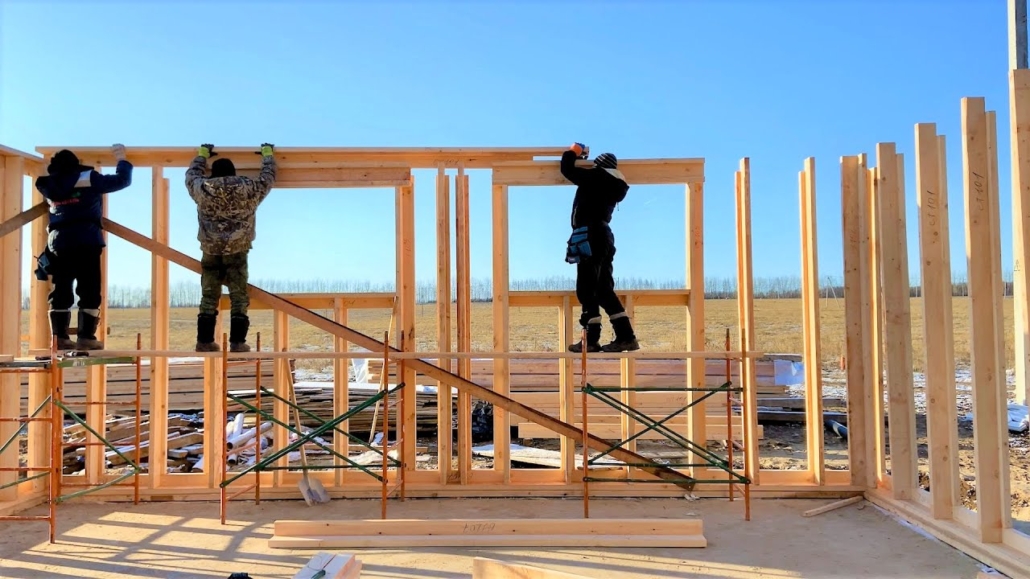
Ask specifically: Who will be the Maestro on my site, and how long has he worked for you? Construction in Costa Rica is labor-intensive. The quality of your finishes depends entirely on the stability of the crew. A builder who hires day laborers from the town square will deliver inconsistent work. You want a builder who retains a permanent crew of skilled artisans. Knowing the top qualities of a professional construction crew in Costa Rica such as uniformed workers, safety gear compliance, and low turnover is a strong indicator of the company’s professionalism.
3. The Site Prep Philosophy
This is a technical test. Ask them: How do you determine the foundation depth for this specific lot? If they answer, We usually dig down one meter, be wary. The correct answer should involve soil studies. Costa Rica is seismically active. A professional builder will refuse to quote a foundation price until they have seen the soil report. They should discuss water runoff, retaining walls, and compaction rates. Competent builders know how to choose the right excavation contractor in Costa Rica because they understand that 90% of structural failures are caused by water management issues, not the concrete itself.
4. The Old House Tour
Do not just look at their current projects. Ask to visit a home they built 3 to 5 years ago.
- What to look for: Look at the ceilings for water stains. Look at the corners of the windows for hairline cracks. Check the wooden cabinetry for termite damage. A house that still looks pristine after five rainy seasons is the ultimate resume.
This is the single most dangerous area for foreign investors. In Costa Rica, labor laws are extremely protective of the worker. Every worker must be insured through the CCSS (Caja Costarricense de Seguro Social), known simply as La Caja.
- The Cost: This adds approximately 26-27% to the cost of payroll.
- The Risk: If you hire a cheap builder who pays his workers under the table to save money, you are liable. If a worker is fired or injured, they can sue you, the homeowner, for back wages and unpaid social security. The government can place a lien on your property, freezing your ability to sell or transfer it.
- The Solution: Your contract must explicitly state that the Contractor assumes all employer responsibilities and holds the Owner harmless. You should require monthly proof that the CAJA payments have been made for the crew working on your site. Never assume it is being done; verify it.
Phase 5: The Contract Structure (Fixed vs. Cost Plus)
There are two primary ways to structure the financial relationship. Understanding the difference is vital for your budget sanity.
Option A: Fixed Price (Obra Vendida)
The contractor gives you a single, all-inclusive price for the finished home (e.g., $450,000).
- Pros: Certainty. You know the number. The builder takes the risk on material price fluctuations.
- Cons: You pay for that certainty. The builder will add a contingency margin (usually 5-10%) to the bid to cover their risk. Also, if they underbid, they may be tempted to use cheaper materials (e.g., thinner gauge zinc roofing) to protect their profit.
- Best For: Clients who want a hands-off experience and defined budget limits.
Option B: Cost Plus (Administración)
You pay the actual cost of materials and labor (you see the receipts), plus a fixed fee (usually 12-15% or a flat monthly rate) for the builder’s management.
- Pros: Transparency. You know exactly what a bag of cement costs. If you choose a cheaper tile, the savings go to you, not the builder. It allows for flexibility to make changes during construction.
- Cons: No price cap. If steel prices jump, you pay. If the crew is slow, you pay for the extra hours. It requires the owner to be very involved in auditing the weekly expenses.
- Best For: Experienced investors or those who want high-level customization and control.
For the majority of remote owners, a Fixed Price Contract with a detailed Spec Sheet (listing specific brands for faucets, windows, and floors) is the safest route.
Phase 6: Material Sourcing and Logistics
Costa Rica is a small country with high import taxes. This impacts your build more than you might think. A right contractor will be honest with you about supply chains.
- The Import Fantasy: Clients often want to import their kitchen cabinets or windows from the US (Home Depot or specialized suppliers). A good contractor will explain the reality: by the time you pay freight, insurance, and the 30-50% import duty, that cheap kitchen is now double the price of a custom-built local teak kitchen.
- The Local Reality: The best builders have deep relationships with local providers. They know which quarry has the best stone and which local carpenter can build custom cedar doors that won’t warp.
- The Warning: If a contractor promises Italian marble or German windows without warning you about the 4-month lead time, they are setting you up for a delay. A professional will guide you toward high-quality, locally available materials to keep the project moving.
Phase 7: Managing the Build from Afar
You’ve hired the contractor. You’ve signed the contract. Now you fly back to North America. How do you sleep at night? You must establish a rigorous communication protocol before the first shovel hits the dirt.
- Weekly Visuals: Do not accept text updates. Require a weekly WhatsApp video walkthrough or drone footage. You need to see the rebar spacing before the concrete is poured. You need to see the waterproofing layer before the tile is laid.
- The Milestone Payment Schedule: Never pay based on dates (e.g., Payment #3 due on March 1st). Always pay based on milestones (e.g., Payment #3 due upon completion of roof structure). This keeps the builder motivated. If they are slow, they don’t get paid.
- The Independent Inspector: Even with the best builder, trust but verify. Hiring a third-party project manager to visit the site once a month is a small insurance policy. They can catch technical errors that you, as a layperson, would miss in a video call.
Phase 8: The Final Huddle – Warranties and Handover
The relationship doesn’t end when you get the keys. A professional contractor stands behind their work. In Costa Rica, the law mandates a 5-year warranty on structural elements. However, the grey area is often the finishes (cracked tiles, peeling paint, leaking faucets). A quality contract will specify a 1-year warranty on finishes. Before you make the final retainage payment (usually the last 5-10%), you must perform a Punch List walkthrough. Go through the house and tag every defect with blue tape. The contractor must fix these items before receiving that final check.
Furthermore, ensure you receive the As-Built drawings. Changes happen during construction. You need a set of plans that shows where the pipes actually are, not where they were drawn on the original plan. This is crucial for future renovations or repairs.
Conclusion: The Art of the Partnership
Hiring a contractor in Costa Rica is not a transaction; it is a partnership. You are entering into a long-term relationship that requires mutual respect, clear communication, and cultural empathy. The cheapest bid is rarely the best deal. In fact, a bid that is 20% lower than the others is often a sign that the contractor has missed something critical like the site preparation costs or the proper social security payments that will come back to haunt you.
To find the best builders in Costa Rica, you must be willing to ask the hard questions. You must verify the paperwork. And you must trust your gut. If a contractor feels disorganized during the interview, they will be chaotic during the build. But when you find that right partner the one who values transparency, respects the engineering, and takes pride in their craft the process becomes a joy. You aren’t just building a structure; you are creating a legacy. You are building the backdrop for the best years of your life. Choose wisely, and the Pura Vida will follow.
Frequently Asked Questions (FAQs)
What is the Retainage in a construction contract?
Retainage is a portion of the agreed-upon contract price (typically 5% to 10%) that you withhold until the very end of the project. This money is only released after the final walkthrough is complete and all punch list items (minor repairs or touch-ups) have been addressed. It ensures the builder returns to finish the small details.
How do I check if a builder is paying their workers’ insurance (CAJA)?
You should request a Planilla de la CCSS (Social Security Payroll Report) from your builder every month before releasing the next progress payment. This document lists the names of the workers on your project and proves that their insurance contributions have been paid to the government.
Can I fire my contractor if I am not happy?
Yes, but you must have a Termination Clause in your contract. This clause should outline the specific grounds for termination (e.g., delays exceeding 30 days, failure to follow plans) and how the final settlement will be calculated to avoid legal disputes.
What is the difference between Grey Work and Turnkey?
Grey Work (Obra Gris) refers to the structural shell of the house foundation, walls, roof, and rough plumbing/electrical. It does not include finishes like tile, windows, cabinets, or paint. Turnkey (Llave en Mano) means the house is 100% complete, cleaned, and ready for you to move in.


Leave a Reply
Want to join the discussion?Feel free to contribute!