How to Hire a Contractor in Costa Rica: The 2026 Comprehensive Guide

How to Hire the Right Contractor in Costa Rica (Avoid Expensive Mistakes)

Building a custom home in Costa Rica is more than a real estate decision it’s the realization of a long-held dream. But turning that vision into reality depends on one critical choice: hiring the right contractor. The professional you choose will determine whether your build is smooth and predictable or costly and stressful.

For U.S. and Canadian expats, Costa Rica’s construction landscape can feel unfamiliar. Legal systems, permitting processes, and industry norms differ from North America, and reliable references are not always easy to find. The most common construction failures stem not from the market itself, but from poor vetting, weak contracts, and a lack of local understanding.

This guide serves as a practical vetting manual, outlining how to identify qualified contractors, avoid legal and financial pitfalls, and ensure your Costa Rica home is built to the standard you expect in 2025.


Phase 1: Decoding the Ecosystem (Who is Who?)

Before you hire anyone, you must understand the cast of characters in the Costa Rican construction play. In the US or Canada, you might just hire a General Contractor (GC). In Costa Rica, the roles are more segmented, and understanding the hierarchy is critical.

The Maestro de Obras (Master Foreman)

The Maestro is often a highly skilled tradesman with decades of experience. He is the person physically shouting orders on the site, laying the block, and managing the crew.

  • The Lure: Hiring a Maestro directly is the cheapest option. You cut out the company overhead and might save 20-25% on labor costs.
  • The Trap: When you hire a Maestro directly, you become the legal employer. You are responsible for registering the construction with the government, paying the Social Security (CAJA) for every worker, and buying every bag of cement. If a worker falls off a ladder, you are personally liable. If the materials don’t arrive, you must find a new supplier. For an expat not living on-site, this route is a recipe for disaster.

The Ingeniero Residente (Resident Engineer)

By law, every construction project in Costa Rica must be overseen by a licensed engineer or architect registered with the CFIA (Colegio Federado de Ingenieros y de Arquitectos).

  • The Role: This professional signs off on the technical quality. They ensure the rebar tying matches the seismic code. However, simply having an engineer sign the plans does not mean they are managing the daily build. You need to clarify if they are just signing (visiting once a week) or building (managing the project daily).

The Professional Construction Firm (The General Contractor)

This is the entity you want. A registered construction company acts as the umbrella. They employ the Maestro, they hire the Engineer, and they manage the liabilities.

  • The Value: They offer a contract that shields you. They have credit lines with suppliers (meaning work doesn’t stop if a wire transfer is delayed). They handle the bureaucracy. Most importantly, they offer a warranty.

Phase 2: The Critical Importance of Turnkey Solutions

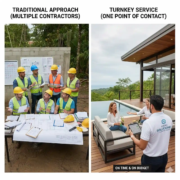
One of the most common mistakes we see is the fragmented approach. A client hires an architect from San José to design the house, and then hires a separate builder in Guanacaste to build it. This often leads to the Blame Game. The builder argues that the architect’s plans are structurally impossible or over budget. The architect argues that the builder is incompetent. You, the owner, are stuck in the middle paying for the revisions.

For international buyers, the Design-Build or Turnkey model is superior. In this scenario, a single entity is responsible for the entire timeline from the first soil sample to the final installation of the kitchen cabinets. This aligns incentives perfectly: the team designing the house knows they have to build it for the budget they quoted.

Understanding how turnkey services save time and money in Costa Rica projects is not just about convenience; it is about risk mitigation. A turnkey provider creates a single point of accountability. If the tile is wrong, there is only one phone number to call.

Phase 3: The Vetting Gauntlet (How to Interview)

Do not rely on a recommendation from a bartender or a casual acquaintance. Treat this process like a corporate merger. You are trusting this entity with hundreds of thousands of dollars. Here is your interrogation checklist.

1. The CFIA Registration Check

Every legitimate builder must be registered. Ask for their CFIA registration number. You can go to the CFIA website and verify their standing.

  • Red Flag: If they say, My engineer handles that, or cannot produce a corporate ID (CĂ©dula JurĂ­dica), walk away. You need to know you are dealing with a solvent legal entity, not a ghost.

2. The Crew Continuity Question

Ask specifically: Who will be the Maestro on my site, and how long has he worked for you? Construction in Costa Rica is labor-intensive. The quality of your finishes depends entirely on the stability of the crew. A builder who hires day laborers from the town square will deliver inconsistent work. You want a builder who retains a permanent crew of skilled artisans. Knowing the top qualities of a professional construction crew in Costa Rica such as uniformed workers, safety gear compliance, and low turnover is a strong indicator of the company’s professionalism.

3. The Site Prep Philosophy

This is a technical test. Ask them: How do you determine the foundation depth for this specific lot? If they answer, We usually dig down one meter, be wary. The correct answer should involve soil studies. Costa Rica is seismically active. A professional builder will refuse to quote a foundation price until they have seen the soil report. They should discuss water runoff, retaining walls, and compaction rates. Competent builders know how to choose the right excavation contractor in Costa Rica because they understand that 90% of structural failures are caused by water management issues, not the concrete itself.

4. The Old House Tour

Do not just look at their current projects. Ask to visit a home they built 3 to 5 years ago.

  • What to look for: Look at the ceilings for water stains. Look at the corners of the windows for hairline cracks. Check the wooden cabinetry for termite damage. A house that still looks pristine after five rainy seasons is the ultimate resume.

Phase 4: Navigating the Labor Laws (The CAJA Trap)

This is the single most dangerous area for foreign investors. In Costa Rica, labor laws are extremely protective of the worker. Every worker must be insured through the CCSS (Caja Costarricense de Seguro Social), known simply as La Caja.

  • The Cost: This adds approximately 26-27% to the cost of payroll.
  • The Risk: If you hire a cheap builder who pays his workers under the table to save money, you are liable. If a worker is fired or injured, they can sue you, the homeowner, for back wages and unpaid social security. The government can place a lien on your property, freezing your ability to sell or transfer it.
  • The Solution: Your contract must explicitly state that the Contractor assumes all employer responsibilities and holds the Owner harmless. You should require monthly proof that the CAJA payments have been made for the crew working on your site. Never assume it is being done; verify it.

Phase 5: The Contract Structure (Fixed vs. Cost Plus)

There are two primary ways to structure the financial relationship. Understanding the difference is vital for your budget sanity.

Option A: Fixed Price (Obra Vendida)

The contractor gives you a single, all-inclusive price for the finished home (e.g., $450,000).

  • Pros: Certainty. You know the number. The builder takes the risk on material price fluctuations.
  • Cons: You pay for that certainty. The builder will add a contingency margin (usually 5-10%) to the bid to cover their risk. Also, if they underbid, they may be tempted to use cheaper materials (e.g., thinner gauge zinc roofing) to protect their profit.
  • Best For: Clients who want a hands-off experience and defined budget limits.

Option B: Cost Plus (AdministraciĂłn)

You pay the actual cost of materials and labor (you see the receipts), plus a fixed fee (usually 12-15% or a flat monthly rate) for the builder’s management.

  • Pros: Transparency. You know exactly what a bag of cement costs. If you choose a cheaper tile, the savings go to you, not the builder. It allows for flexibility to make changes during construction.
  • Cons: No price cap. If steel prices jump, you pay. If the crew is slow, you pay for the extra hours. It requires the owner to be very involved in auditing the weekly expenses.
  • Best For: Experienced investors or those who want high-level customization and control.

For the majority of remote owners, a Fixed Price Contract with a detailed Spec Sheet (listing specific brands for faucets, windows, and floors) is the safest route.

Phase 6: Material Sourcing and Logistics

Costa Rica is a small country with high import taxes. This impacts your build more than you might think. A right contractor will be honest with you about supply chains.

  • The Import Fantasy: Clients often want to import their kitchen cabinets or windows from the US (Home Depot or specialized suppliers). A good contractor will explain the reality: by the time you pay freight, insurance, and the 30-50% import duty, that cheap kitchen is now double the price of a custom-built local teak kitchen.
  • The Local Reality: The best builders have deep relationships with local providers. They know which quarry has the best stone and which local carpenter can build custom cedar doors that won’t warp.
  • The Warning: If a contractor promises Italian marble or German windows without warning you about the 4-month lead time, they are setting you up for a delay. A professional will guide you toward high-quality, locally available materials to keep the project moving.

Phase 7: Managing the Build from Afar

You’ve hired the contractor. You’ve signed the contract. Now you fly back to North America. How do you sleep at night? You must establish a rigorous communication protocol before the first shovel hits the dirt.

  1. Weekly Visuals: Do not accept text updates. Require a weekly WhatsApp video walkthrough or drone footage. You need to see the rebar spacing before the concrete is poured. You need to see the waterproofing layer before the tile is laid.
  2. The Milestone Payment Schedule: Never pay based on dates (e.g., Payment #3 due on March 1st). Always pay based on milestones (e.g., Payment #3 due upon completion of roof structure). This keeps the builder motivated. If they are slow, they don’t get paid.
  3. The Independent Inspector: Even with the best builder, trust but verify. Hiring a third-party project manager to visit the site once a month is a small insurance policy. They can catch technical errors that you, as a layperson, would miss in a video call.

Phase 8: The Final Huddle – Warranties and Handover

The relationship doesn’t end when you get the keys. A professional contractor stands behind their work. In Costa Rica, the law mandates a 5-year warranty on structural elements. However, the grey area is often the finishes (cracked tiles, peeling paint, leaking faucets). A quality contract will specify a 1-year warranty on finishes. Before you make the final retainage payment (usually the last 5-10%), you must perform a Punch List walkthrough. Go through the house and tag every defect with blue tape. The contractor must fix these items before receiving that final check.

Furthermore, ensure you receive the As-Built drawings. Changes happen during construction. You need a set of plans that shows where the pipes actually are, not where they were drawn on the original plan. This is crucial for future renovations or repairs.

Conclusion: The Art of the Partnership

Hiring a contractor in Costa Rica is not a transaction; it is a partnership. You are entering into a long-term relationship that requires mutual respect, clear communication, and cultural empathy. The cheapest bid is rarely the best deal. In fact, a bid that is 20% lower than the others is often a sign that the contractor has missed something critical like the site preparation costs or the proper social security payments that will come back to haunt you.

To find the best builders in Costa Rica, you must be willing to ask the hard questions. You must verify the paperwork. And you must trust your gut. If a contractor feels disorganized during the interview, they will be chaotic during the build. But when you find that right partner the one who values transparency, respects the engineering, and takes pride in their craft the process becomes a joy. You aren’t just building a structure; you are creating a legacy. You are building the backdrop for the best years of your life. Choose wisely, and the Pura Vida will follow.

Frequently Asked Questions (FAQs)

What is the Retainage in a construction contract?
Retainage is a portion of the agreed-upon contract price (typically 5% to 10%) that you withhold until the very end of the project. This money is only released after the final walkthrough is complete and all punch list items (minor repairs or touch-ups) have been addressed. It ensures the builder returns to finish the small details.

How do I check if a builder is paying their workers’ insurance (CAJA)?
You should request a Planilla de la CCSS (Social Security Payroll Report) from your builder every month before releasing the next progress payment. This document lists the names of the workers on your project and proves that their insurance contributions have been paid to the government.

Can I fire my contractor if I am not happy?
Yes, but you must have a Termination Clause in your contract. This clause should outline the specific grounds for termination (e.g., delays exceeding 30 days, failure to follow plans) and how the final settlement will be calculated to avoid legal disputes.

What is the difference between Grey Work and Turnkey?
Grey Work (Obra Gris) refers to the structural shell of the house foundation, walls, roof, and rough plumbing/electrical. It does not include finishes like tile, windows, cabinets, or paint. Turnkey (Llave en Mano) means the house is 100% complete, cleaned, and ready for you to move in.
How to Choose the Right Excavation Contractor in Costa Rica

How to Choose the Right Excavation Contractor in Costa Rica

Introduction

Choosing the right excavation contractor in Costa Rica is one of the most important steps in building a home or beginning any construction project. Excavation is the first stage that prepares the land for everything that follows. A strong and stable foundation depends on proper land preparation, soil removal, grading and safe earth movement. When excavation is done correctly, the entire project begins on solid ground. When it is done poorly, future problems can appear during construction or even years after the home is finished.

Costa Rica has diverse landscapes. Many properties have slopes, rocky soil, dense vegetation or water flow patterns that must be handled carefully. This makes excavation a specialized service that requires skill, experience and the right equipment. A professional excavation contractor not only performs the work efficiently but also understands how to manage the land safely and responsibly. Choosing the right team helps you avoid costly mistakes, delays and structural risks.

This guide explains how to choose the right excavation contractor in Costa Rica using simple and clear wording. You will learn what qualities to look for, how to check experience, what questions to ask and how to make sure the contractor is prepared to handle your project.

Understanding the Role of an Excavation Contractor

An excavation contractor prepares the land for construction by removing soil, leveling surfaces and shaping the lot according to engineering requirements. Their work affects drainage, slope stability and the strength of the foundation. They clear vegetation, remove rocks and create safe access for future construction work.

In Costa Rica, excavation is especially important because of varying soil conditions, rainfall intensity and natural slopes. A professional excavation contractor understands how these conditions influence safety and durability. Their job includes reading engineering plans, using heavy equipment correctly and following environmental regulations.

When you understand the role of an excavation contractor, you can make a better choice and choose a team that supports your project goals.

Why Proper Excavation Matters in Costa Rica

Proper excavation creates a safe and stable base for your home. Without correct excavation, the foundation may shift over time. Poor drainage can lead to erosion, water buildup or soil movement. These issues can affect the structure and increase repair costs.

Costa Rica experiences heavy rains in certain seasons, so land must be shaped correctly to guide water flow. A professional excavation contractor understands how to work with the natural environment instead of against it. They know how to prepare slopes, compact soil and manage water movement.

Good excavation also improves construction efficiency. When the land is flat and stable, builders can begin foundation work without delays. The entire construction timeline becomes smoother and more predictable.

Check the Contractor’s Experience and Track Record

Experience is one of the strongest indicators of a reliable excavation contractor in Costa Rica. A team with years of hands on work understands how to operate safely on different types of land. They know how to use equipment properly, handle unexpected soil conditions and follow engineering requirements.

When choosing a contractor, ask about projects they have completed. A good contractor can explain the challenges they handled and the methods they used. Their track record shows whether they deliver consistent results.

Experience also helps the contractor work more efficiently. Skilled operators move earth more accurately, avoid unnecessary cuts and reduce waste. This improves the quality of the excavation and helps control project cost.

Evaluate the Equipment and Machinery Used

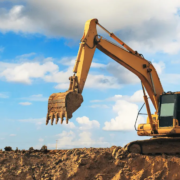
Excavation requires the right equipment. Professional contractors use machinery that matches the size and needs of the project. This may include excavators, backhoes, compactors, loaders and trucks for soil removal.

Well maintained equipment improves safety and ensures the work is completed on time. Poorly maintained machinery can break down during the job and cause delays. A professional contractor checks and maintains their equipment regularly. They also know how to choose the right machinery for different land conditions, such as steep slopes or rocky areas.

When evaluating a contractor, ask about the equipment they use and whether it is owned or rented. A contractor with reliable machinery is better prepared to handle your project.

Look for Knowledge of Local Soil and Land Conditions

Costa Rica’s soil varies from region to region. Some areas have clay soil, some have volcanic rock and others have sandy or mixed soil. A good excavation contractor understands how each soil type behaves during construction. This knowledge helps them shape the land correctly and prepare foundations that remain strong over time.

Local knowledge is also important for understanding water flow, drainage and erosion patterns. An inexperienced contractor may remove too much soil or create shapes that lead to water pooling. A professional contractor knows how to manage these conditions and work with the natural slope of the land.

When a contractor understands local soil, they can prepare the site according to engineering plans and reduce long term risks.

Check for Licensing and Legal Compliance

In Costa Rica, professional construction services must follow national regulations. A reliable excavation contractor operates legally, carries the correct business permits and follows safety guidelines. They also respect environmental rules, especially when clearing land near protected areas or water sources.

A contractor who follows legal compliance demonstrates professionalism and responsibility. They understand the rules for transporting soil, handling machinery and protecting nearby areas. Legal compliance also protects you from potential fines or delays.

Always ask the contractor for proof of licensing and legal operation. A professional team will provide these documents easily.

Review Safety Practices and Site Management

Excavation involves heavy machinery and deep cuts in the land. Safety must always be a priority. A professional excavation contractor follows strict safety practices, trains workers correctly and uses protective equipment. They also manage the site responsibly by keeping the area organized and marking hazardous zones.

Good site management includes planning safe entry and exit routes, storing materials correctly and maintaining clear communication among workers. This level of organization reduces the chances of accidents and keeps the project running efficiently.

Contractors who prioritize safety show care not only for their workers but also for the client’s property and investment.

Ask About Project Timelines and Reliability

Timelines are important for excavation work because delays at the beginning of a project can affect the entire construction schedule. A reliable excavation contractor provides a clear estimate of how long the work will take. They also communicate openly if conditions change during the project.

A contractor with strong time management skills prepares the site correctly, uses equipment efficiently and keeps the project moving. They also plan for weather changes, which are common in Costa Rica’s rainy season.

When a contractor respects timelines, the foundation work can begin on schedule. This improves the flow of the whole construction process.

Compare Pricing with the Scope of Work

Pricing for excavation varies depending on the size of the project, the land condition and the amount of earth movement required. A professional contractor provides a clear and detailed estimate. They explain what is included in the price and what may cost extra.

When comparing prices, avoid choosing the lowest estimate without understanding why it is lower. Some contractors may reduce costs by using older equipment or skipping important steps. A reliable contractor charges fairly based on quality, safety and accuracy.

A clear estimate helps you plan your budget and prevents unexpected expenses later.

Inspect Past Work and Request References

One of the best ways to evaluate an excavation contractor is to look at their past work. Ask the contractor to show previous projects or provide references from past clients. This helps you understand their quality and consistency.

If possible, visit a site where the contractor has worked. Look at the shape of the land, the level of compaction and how they handled slopes. You can learn a lot from seeing real results.

Talking to previous clients gives you insight into how the contractor communicates, meets deadlines and handles challenges. Positive experiences from past customers are a strong sign of a reliable contractor.

Check Their Ability to Follow Engineering Plans

Excavation must follow engineering instructions to ensure the foundation is safe and stable. A professional excavation contractor understands how to read engineering plans and follow exact measurements. They know how deep to cut, how wide to shape areas and how to level surfaces correctly.

Mistakes in excavation can lead to structural problems later on. A contractor who works precisely reduces these risks. Their ability to follow plans shows professionalism and technical skill.

When choosing a contractor, ask about their experience working with engineers and architects. A skilled team will communicate well with other professionals and ensure accuracy at every step.

Conclusion

Choosing the right excavation contractor in Costa Rica is essential for creating a safe and stable foundation. A professional contractor brings experience, safety, good communication and strong knowledge of local soil conditions. They use proper equipment, follow engineering plans and respect timelines. These qualities protect your investment and ensure that the first stage of construction begins correctly.

The land preparation stage shapes the entire future of the project. When you choose a reliable and skilled excavation contractor, the rest of the construction process becomes smoother, safer and more predictable. With careful research and the right questions, you can make a confident decision and select a contractor who supports your goals.

Why Choose Us

We provide professional excavation services in Costa Rica with experienced operators, modern equipment and strong safety practices. Our team understands local land conditions and follows engineering plans with accuracy. We complete excavation work on time, communicate clearly and prepare your land for a stable and long lasting foundation.

We take pride in responsible earth movement, soil management and site preparation. Our experience and attention to detail ensure that each project begins on the right path. With us, you receive reliable service, clear guidance and high quality results.

Frequently Asked Questions

What should I look for in an excavation contractor in Costa Rica
Look for experience, proper equipment, licensing, safety practices and a strong track record of past work.

Why is experience important in excavation
Experience helps the contractor understand soil types, manage land safely and follow engineering plans correctly.

How long does excavation usually take
The timeline depends on the size of the project and land conditions. A professional contractor will provide a clear estimate.

Does excavation affect the strength of the foundation
Yes. Proper excavation shapes the land for safe foundation placement and long term stability.

How can I know if the contractor is reliable
Check references, inspect past projects and confirm that they operate legally with proper documentation.

Turnkey Services in Costa Rica: Save Time and Money

How Turnkey Services Save Time and Money in Costa Rica Projects

Building a home or development project in Costa Rica is an exciting step for families, retirees, and investors. The country offers a peaceful lifestyle, warm weather, and beautiful landscapes. Many people dream of creating a custom home, vacation villa, or rental property. However, the construction process can feel overwhelming for those who are not familiar with local rules, climate challenges, and building systems. This is where turnkey services in Costa Rica offer an important advantage. Turnkey services provide one complete solution from design to final handover. This approach saves time, reduces costs, and makes the building process more predictable.

Turnkey construction Costa Rica companies combine architectural design, engineering, construction management, material procurement, and project supervision into one coordinated service. Instead of hiring separate architects, engineers, and contractors, a turnkey team handles everything. This unified structure creates clear communication, faster decisions, and better budgeting. Many construction delays and cost increases happen because different teams cannot coordinate. With turnkey projects Costa Rica services, these problems are avoided because everyone works under the same plan.

This guide explains how turnkey services save time and money in Costa Rica projects. It uses simple wording so that anyone, even someone new to construction, can understand the advantages of full service construction Costa Rica companies provide. Whether you are building your dream home or developing a rental property, turnkey solutions offer efficiency, transparency, and peace of mind.

Understanding Turnkey Services in Costa Rica

Turnkey services in Costa Rica refer to a construction approach where one team manages the entire project. This includes planning, design, engineering, permits, materials, labor, supervision, and the final finishing. When the project is complete, it is delivered to the owner ready for use.

This eliminates the need to hire multiple separate companies. It also reduces the risk of miscommunication, scheduling conflicts, and unexpected costs. Turnkey home building Costa Rica teams work as one unit, keeping the project organized from start to finish.

Turnkey services provide a full service construction Costa Rica solution that is ideal for international clients who may not be in the country during the build. Weekly updates, clear timelines, and organized supervision help owners stay informed in a simple and structured way.

Why the All in One Model Works Better in Costa Rica

Costa Rica has specific building regulations, environmental rules, and municipal requirements. If design, engineering, and construction are handled by separate companies, each one must interpret the rules independently. This often leads to confusion and conflicting decisions.

With an all in one construction service, the team works under a single plan. The architect designs with the engineer’s needs in mind. The builder follows the engineer’s structural plan exactly. The project manager coordinates every stage. This unified structure prevents delays and reduces mistakes.

Because of the tropical climate, construction must also consider humidity, rainfall, soil conditions, and ventilation. A single team that understands these factors creates better results. Turnkey projects Costa Rica companies have systems built around local conditions, making the entire process more efficient.

Streamlined Design and Construction Coordination

One of the main benefits of turnkey services is streamlined coordination. Design and construction happen under the same management, which prevents many common construction challenges.

When design and construction are separate, builders may question details or ask for changes that slow the project. Engineers may demand updates. Municipalities may request corrections. These delays add weeks or months to the schedule.

Turnkey construction Costa Rica teams solve this problem because they coordinate everything internally. The architect, engineer, and builder work together from the beginning. This allows the design to be practical, efficient, and ready for construction without adjustments.

Clear coordination saves time, reduces confusion, and keeps the project moving on schedule.

Faster Permitting Through Accurate Documentation

The permit stage can be slow in Costa Rica when documents are incomplete or inconsistent. When separate professionals prepare documents, small mistakes can delay the process.

Turnkey services in Costa Rica use experienced teams who prepare architectural and engineering plans correctly the first time. Because they know local requirements and have relationships with municipalities, they can submit documents faster and respond to requests immediately.

With accurate documents and clear communication, municipal approval often moves much faster. This saves weeks or even months compared to projects that use separate companies.

Better Cost Control and Budget Friendly Planning

One of the biggest reasons why turnkey services save money is cost control. When you hire separate architects, engineers, and contractors, each one sets their own pricing. This can create surprises in the budget when construction begins.

Turnkey home building Costa Rica companies provide one clear price for the entire project. Because they manage materials, labor, and schedules, they can predict costs more accurately. They also purchase materials in larger quantities, which lowers costs.

Turnkey services reduce the risk of extra charges, unexpected fees, or budget changes. If adjustments are needed, they are handled in one place without additional markups. This makes turnkey solutions budget friendly and predictable.

Eliminating Miscommunication and Reducing Delays

Many construction delays happen because different teams do not understand each other’s work. An engineer may request a change that contradicts the architect’s design. The builder may start a step before the engineer approves it. The municipality may ask for documents that no one has prepared.

Turnkey services prevent these issues because all communication passes through one management team. Everyone works under the same timeline and instructions. This reduces miscommunication and improves project efficiency.

Communication with the homeowner is also simpler. You receive updates from one team instead of contacting multiple companies. This reduces confusion and helps you stay informed with ease.

Faster Problem Solving on the Job Site

Construction projects always face unexpected challenges. Soil conditions may differ from the survey. Material availability may change. Weather may cause delays. When problems appear, the response speed determines how quickly the project recovers.

A turnkey construction Costa Rica team can address issues immediately because all departments are under the same company. The engineer can visit the site, adjust the plan, and communicate with the builder directly. The project manager can respond in hours instead of days.

Outsourcing or using separate companies slows this process because each team is working independently. Turnkey services solve problems with speed and accuracy, saving time and reducing extra costs.

Access to Better Material Management

Material procurement is one of the most important parts of a successful project. Turnkey builders order materials in advance, store them safely, and deliver them to the site on time. They also know which materials perform best in Costa Rica’s tropical climate.

When materials are ordered by different teams, delays often happen. One contractor may wait for another to order supplies. The wrong materials may arrive. Shortages may cause the project to stop temporarily.

Turnkey companies prevent these issues because they manage all materials themselves. This improves efficiency, quality, and cost control.

Stronger Quality Assurance From a Single Team

Quality assurance is easier when one team is responsible for the entire project. The builder cannot blame the architect. The architect cannot blame the engineer. Everyone is accountable for the final result.

Turnkey projects Costa Rica teams follow strict quality checks because their reputation depends on delivering a completed home. They inspect each stage carefully, including foundation, structure, electrical systems, plumbing, and finishes.

This consistent supervision ensures that every part of the project meets or exceeds local standards.

Better Planning for Tropical Climate and Local Conditions

Costa Rica has unique conditions that require proper planning. Heavy rain, humidity, sunlight, and coastal winds influence material choices, drainage design, roofing, and ventilation. A team unfamiliar with these conditions may make decisions that increase maintenance costs later.

Turnkey construction Costa Rica teams have long term experience with local conditions. They understand how to prepare land correctly, how to design for airflow, and how to prevent moisture problems. Their experience reduces errors and improves the long term performance of the home.

Convenience for International Clients

Many clients who build homes in Costa Rica live overseas. They cannot visit the site every week or manage different contractors. Turnkey services give international clients peace of mind because they only communicate with one team.

Clear weekly updates, photos, videos, and progress reports make the process stress free. Clients do not need to coordinate with architects, engineers, and contractors separately. The turnkey team handles everything.

This convenience is one of the strongest reasons why turnkey solutions save time and money for international property owners.

Long Term Value and Reduced Maintenance Costs

Homes built with turnkey services often have fewer long term maintenance issues because planning, design, and construction are coordinated by one team. When everything fits together correctly, fewer repairs are needed.

Using the right materials, correct construction methods, and proven building systems reduces long term costs. This makes turnkey projects a strong financial decision for homeowners and investors.

Conclusion

Turnkey services in Costa Rica offer a complete and efficient solution for home building and development projects. They save time by improving communication, speeding up permits, preventing delays, and solving problems quickly. They save money by offering accurate budgets, better material management, and reduced long term maintenance. Turnkey construction Costa Rica teams understand the climate, the land, and the local rules, making them the best choice for both expats and local homeowners. When design, engineering, and construction come from one coordinated team, the entire project becomes smoother, faster, and more reliable.

Why Choose Us

We provide complete turnkey construction services across Costa Rica. Our team handles architectural design, engineering, permits, materials, construction, and final finishing in one organized system. We offer clear budgets, weekly updates, and full project supervision. Our goal is to deliver a home that is beautiful, durable, and ready for living from the moment you receive the keys. If you want a stress free building experience with expert support, our turnkey solutions offer the best approach.

Frequently Asked Questions

Do turnkey services cost more
Turnkey services often cost less in the long run because they avoid delays and reduce extra charges.

Can turnkey teams handle permits
Yes. Turnkey companies prepare and submit all permit documents.

Are turnkey services good for expats building from abroad
Yes. Turnkey services are ideal because they provide one point of contact and complete project management.

Do turnkey projects finish faster
Yes. Turnkey teams streamline communication and prevent delays caused by multiple contractors.

What is included in turnkey construction
Design, engineering, permits, materials, labor, supervision, and final finishing.

Guanacaste home builders

Trusted Home Builders in Guanacaste

If you’ve ever wandered the beaches of Tamarindo at sunset or stood on a ridge looking out over Papagayo Bay, you’ve probably had the thought. What if I built a home here? Not just a place to stay, but something permanent, something yours.

It’s a common dream, but the leap from dream to reality? That’s the hard part. Building abroad feels complicated—permits, designs, contractors, and even the weather you might not be used to. Which is why finding the right partner matters so much. And in this region, the conversation often comes back to the same point: who are the most trusted Guanacaste home builders?

Why Guanacaste?

Before we get to the builders, it’s worth pausing to think about the setting. Guanacaste isn’t like the Central Valley or San José. It has its own rhythm, its own challenges. Long dry seasons where the hills turn golden, heavy rains that come almost without warning, coastal breezes that can cool—or test—structures.

Designing and building here means adapting. Roofs need to stretch wide, not just for beauty but for shade. Walls need to breathe. Outdoor spaces aren’t extras; they’re part of daily life. The best Guanacaste home builders understand this. They don’t drop in designs from somewhere else. They shape homes that belong here.

Trust Built Over Time

Finish Touch Enterprises has been in this industry for more than four decades. Forty years of solving problems, refining processes, and, honestly, making mistakes and learning from them. That’s what trust comes from—time.

Clients hand over more than just money when they decide to build a home. They hand over their hopes, sometimes even their savings. And the only way to honor that is with consistency. That’s why Finish Touch is often named among the most reliable Guanacaste home builders. Not because they promise perfection, but because they’ve earned confidence project after project.

👉 Discover how we guide clients through every stage of building in Costa Rica with confidence.

More Than Just Construction

Anyone can pour concrete or raise walls. The difference between a builder and a trusted partner lies in the details before and after.

Finish Touch handles everything: architectural design, engineering, legal guidance, interiors, even pools. They even operate their own woodshop, producing custom cabinets and furniture to match each project. It sounds small, but it means you’re not waiting months for imported finishes or negotiating with five different subcontractors.

That integration is part of what makes them stand out among Guanacaste home builders. One company, one vision, fewer gaps.

👉 Learn more about our fully managed turnkey construction services.

Step by Step, Not All at Once

One thing that overwhelms newcomers is the order of it all. First, you need the land, then the permits, then the design. It can feel endless.

Trusted builders don’t hand you everything at once. They guide you step by step. Is the land properly titled? Does it have water access? Then comes the design—modern, traditional, or some mix that reflects both your taste and the landscape. Engineers refine the details. Permits follow. Construction begins only when everything is aligned.

That steady, piece-by-piece approach is what separates experienced Guanacaste home builders from the rest.

Modern Meets Traditional

There’s no single style in Guanacaste. Some clients want sharp-edged villas with glass walls framing the ocean. Others want clay-tile roofs, shaded verandas, something rooted in local tradition.

The best projects often combine both. A modern open kitchen under a traditional roofline. A rustic terrace leading to a sleek infinity pool. Homes here don’t need to fit a box; they need to fit the way people actually live.

👉 Browse our custom home designs in Costa Rica to see how each can adapt to Guanacaste’s unique environment.

Outdoor Living Comes First

I’ve noticed that in Guanacaste, the line between indoors and outdoors disappears. Terraces become dining rooms. Pools turn into living rooms. Shaded patios are as essential as kitchens.

That’s why trusted Guanacaste home builders never treat outdoor spaces as afterthoughts. Finish Touch integrates them into the plan from the very beginning—designing pools, decks, and gardens to be extensions of the home.

👉 See how our pool design and construction services bring outdoor living to life.

The Reality of Building Here

It would be dishonest to say the process is flawless. Construction here, like anywhere, has challenges. Rain slows things down. Material costs can change. Timelines stretch.

But what matters is how those challenges are handled. Trusted Guanacaste home builders don’t hide problems. They communicate. They adjust. They keep you updated with photos, budgets, and honest timelines. Finish Touch has built its reputation on that kind of transparency.

Investment Potential

Homes in Guanacaste aren’t just about lifestyle. They can also be smart investments. The region’s popularity with tourists makes well-designed houses attractive rentals. Modern villas near the beach often command high nightly rates. Traditional estates inland can appeal to long-term renters looking for authenticity.

Finish Touch balances personal needs with investment potential. They ask: Should this home be designed purely for you, or also to attract guests when you’re away? That flexibility adds long-term value.

Why Finish Touch?

At the end of the day, you don’t just need a builder. You need someone who can navigate land purchases, permits, designs, engineering, finishes, and even furniture—all without losing the vision.

That’s what Finish Touch does. And it’s why so many clients describe them not just as contractors, but as partners. When you hear people talk about trusted Guanacaste home builders, that’s the distinction. It’s not about who builds the fastest. It’s about who builds with care, clarity, and consistency.

Conclusion: Trust Made Tangible

A house is more than walls. It’s mornings on a shaded terrace, afternoons by the pool, evenings when the sky turns orange and the cicadas hum.

Choosing the right builder in Guanacaste isn’t just a step in the process—it’s the foundation of whether that vision becomes reality. With Finish Touch Enterprises, trust isn’t an abstract word. It’s in every stage, from the first land survey to the final set of keys.

If you’re standing on a lot, looking out at the hills or the sea, and wondering how to turn the dream into something solid, maybe the answer is simpler than it seems. Find builders who know the land, who respect the process, and who walk with you each step of the way. That’s what trust looks like.