
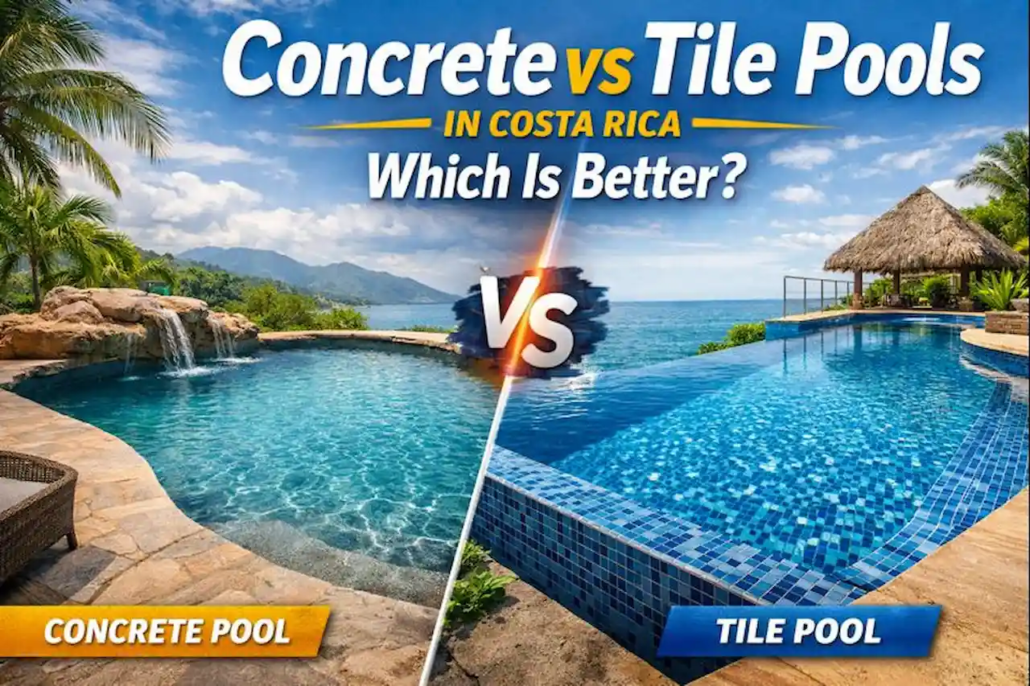
Concrete vs Tile Pools in Costa Rica: Which Is Better?
Building a swimming pool in Costa Rica is a dream for many homeowners, retirees, and expats. With warm weather, beautiful landscapes, and an outdoor focused lifestyle, a pool becomes more than a luxury. It becomes part of daily living. However, one of the biggest decisions people face before starting pool construction is choosing the right pool type. The most common comparison people search for is concrete vs tile pools in Costa Rica.
This decision is not just about appearance. It affects your budget, long term maintenance, durability, comfort, and how well the pool performs in Costa Rica’s tropical climate. Many first time builders feel confused because online information is often technical or incomplete. This guide explains everything in simple language so even someone new to pool construction can fully understand the differences.
By the end of this guide, you will clearly know which pool option suits your needs, lifestyle, and investment goals in Costa Rica.
Understanding Swimming Pool Construction in Costa Rica
Before comparing concrete pools and tile pools, it is important to understand how pool construction works in Costa Rica. Most pools here are custom built rather than prefabricated. This allows builders to adapt to sloped land, soil conditions, rainfall patterns, and coastal environments.
Costa Rica has diverse climates including coastal heat, high humidity, heavy rainfall, and occasional seismic activity. These factors influence material choice, construction methods, and long term durability. Because of this, choosing the wrong pool material can lead to cracks, leaks, higher maintenance costs, and premature repairs.
Both concrete pools and tile pools are commonly used in Costa Rica, but they are built differently and serve different priorities.
What Is a Concrete Pool
A concrete pool is a swimming pool built using reinforced concrete as its main structural material. The pool shell is formed using steel rebar and concrete, creating a strong and solid structure. The interior surface is usually finished with plaster, quartz, or other cement based finishes.
Concrete pools are popular in Costa Rica because they offer full design flexibility. They can be built in almost any shape or size, making them ideal for custom homes and unique landscapes.
Concrete pools are known for their strength and ability to withstand ground movement and temperature changes when properly built.
What Is a Tile Pool
A tile pool is also typically built on a concrete structure, but the interior finish is fully covered with ceramic, porcelain, or glass tiles. Instead of plaster, the surface is finished with tiles that are bonded to the concrete shell.
Tile pools are often considered a luxury option in Costa Rica. They are visually striking and offer a smooth, elegant appearance. Tile pools are especially popular in high end residential projects and luxury villas.
While tile pools share a concrete base, the tile finish changes maintenance needs, cost, and long term performance.
Design Flexibility and Customization Options
When it comes to design flexibility, both concrete pools and tile pools offer customization, but in different ways.
Concrete pools allow complete freedom in shape and depth. You can design infinity edges, beach entries, integrated spas, waterfalls, and custom seating areas. Concrete adapts well to uneven land, which is common in Costa Rica.
Tile pools also allow custom shapes, but the design must account for tile layout and alignment. Curves and complex shapes require more skilled installation, which increases cost and time.
In terms of visual customization, tile pools offer more color and texture options. Glass tiles can reflect sunlight beautifully, while ceramic tiles can match architectural themes. Concrete finishes are more subtle but still customizable with color pigments and textures.
Cost Comparison Between Concrete and Tile Pools in Costa Rica
Cost is one of the most searched concerns when comparing concrete vs tile pools in Costa Rica. Understanding upfront and long term costs helps avoid surprises.
Concrete pools generally have a lower initial construction cost compared to tile pools. The materials are more affordable, and installation requires less specialized labor. This makes concrete pools a more budget friendly option for many homeowners.
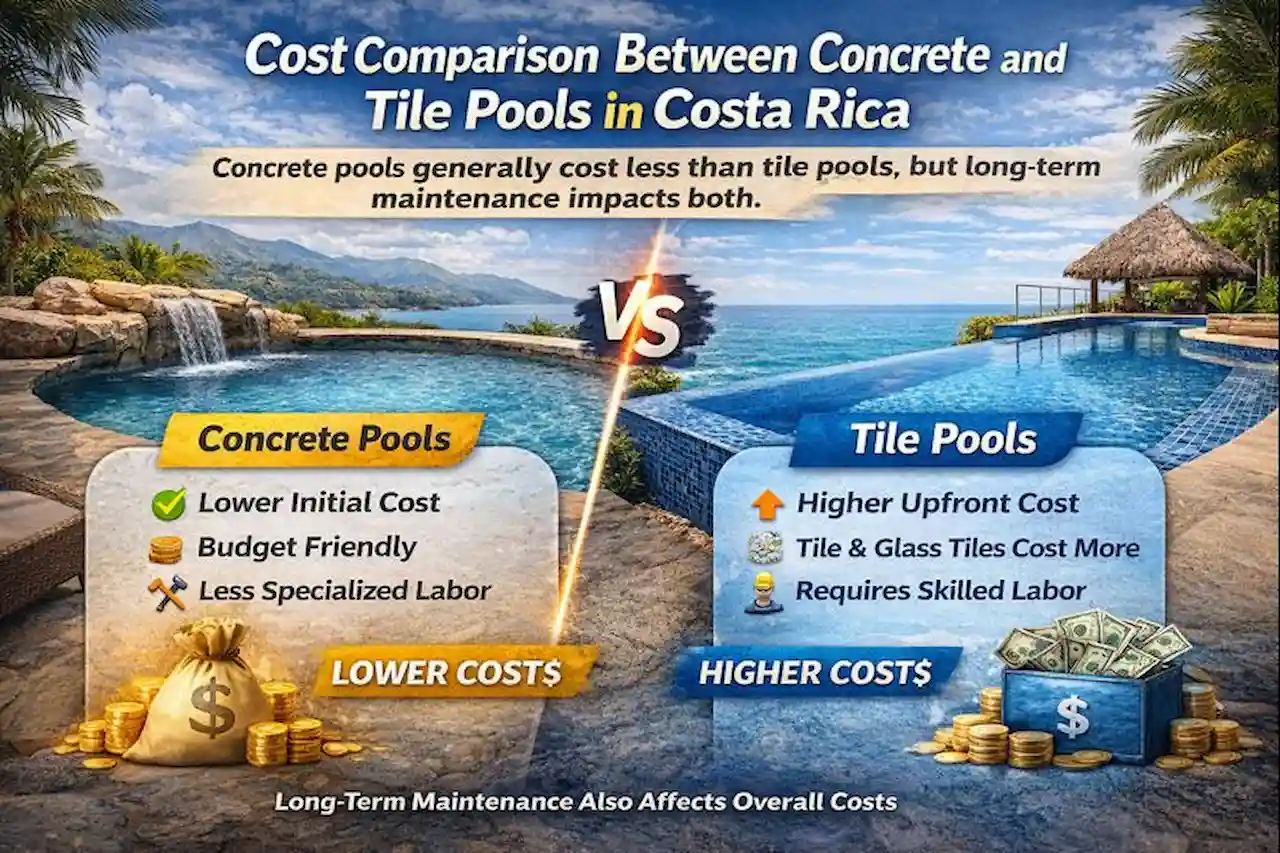
Tile pools have a higher upfront cost due to the price of tiles and skilled labor required for proper installation. Glass tiles in particular can significantly increase the total cost.
However, cost should not be judged only at the beginning. Long term maintenance, repairs, and resurfacing also impact the total investment over time.
Durability and Structural Strength in Costa Rica Climate
Durability is critical in Costa Rica due to humidity, rainfall, and soil conditions. Both pool types can last decades when built correctly, but they behave differently over time.
Concrete pools are highly durable and structurally strong. They can handle ground movement and heavy rainfall better than many other pool types. However, the plaster finish can wear down over time and may require resurfacing.
Tile pools also have strong concrete foundations, but tile adhesion is key. Poor installation can lead to tile detachment, especially in areas with seismic activity or temperature fluctuations.
When installed by expert pool builders in Costa Rica, both options can perform well, but workmanship quality plays a bigger role in tile pool durability.
Maintenance Requirements and Cleaning Effort
Maintenance is often underestimated when choosing a pool type. Many homeowners search for pools that are easy to clean and maintain.
Concrete pools have a slightly rough surface, which can allow algae to attach more easily. This means they often require more frequent brushing and chemical balancing. Over time, stains may develop if maintenance is neglected.
Tile pools have a smooth surface that resists algae buildup better than concrete finishes. Tiles are easier to clean, and stains are less likely to penetrate the surface. This makes tile pools easier to maintain on a day to day basis.
However, tile grout requires attention. Grout lines can discolor or wear over time and may need occasional restoration.
Lifespan and Long Term Performance
One of the most important long tail queries is how long do concrete pools last in Costa Rica. The answer depends on maintenance and construction quality.
Concrete pools can last 30 to 50 years or more with proper care. The structure itself is extremely long lasting, but the interior finish usually needs resurfacing every 10 to 15 years.
Tile pools also have a long lifespan. High quality tiles can last decades without fading or wearing. However, individual tiles may need replacement if damaged.
In the long run, tile pools often maintain their appearance better, while concrete pools require periodic refinishing to stay visually appealing.
Comfort and User Experience
Comfort is another factor that is rarely discussed but very important for daily use.
Concrete pool surfaces can feel rough on the skin, especially after extended swimming. This can be noticeable for children or frequent swimmers.
Tile pools offer a smooth and comfortable surface. The water feels cleaner and more refined, which enhances the swimming experience. Tile surfaces also stay cooler in hot weather, which is beneficial in Costa Rica’s climate.
For homeowners focused on luxury and comfort, tile pools often provide a superior experience.
Aesthetic Appeal and Property Value
Visual appeal matters not only for personal enjoyment but also for property value. Many homeowners build pools as part of a long term investment.
Concrete pools have a classic and natural appearance. They blend well with tropical landscaping and modern architecture. While attractive, they may lose visual freshness over time without resurfacing.
Tile pools are visually striking and maintain their beauty longer. Glass tiles reflect light and create a high end look that appeals to luxury buyers.
In Costa Rica’s real estate market, tile pools often add more perceived value to high end properties, especially in coastal and resort areas.
Suitability for Coastal and Tropical Environments
Costa Rica’s environment varies widely. Coastal areas have salt air, while inland areas experience heavy rainfall and humidity.
Concrete pools perform well inland but may require additional sealing near the coast to prevent surface deterioration. Proper material selection and maintenance are essential.
Tile pools perform exceptionally well in coastal environments because tiles resist salt, moisture, and fading. This makes them a popular choice for beachfront homes and vacation rentals.
Choosing the right pool material based on location is essential for long term satisfaction.
Installation Time and Construction Complexity
Construction timelines matter for homeowners eager to enjoy their pool.
Concrete pools generally have shorter construction timelines because the finishing process is simpler. Delays may still occur due to weather or permitting.
Tile pools take longer to build due to the detailed tile installation process. Each tile must be carefully placed and bonded, which requires time and skilled craftsmanship.
While tile pools take longer, the end result is often worth the wait for those prioritizing luxury and longevity.
Repair and Renovation Considerations
Over time, all pools require some form of repair or renovation.
Concrete pools are easier to repair in terms of structural fixes and surface refinishing. Plaster repairs are relatively straightforward and affordable.
Tile pools require skilled labor for tile replacement. Matching tiles can sometimes be challenging if the original tiles are no longer available.
However, tile pools generally need fewer cosmetic renovations over their lifespan.
Which Pool Type Is Best for You in Costa Rica
There is no universal answer to which pool is better. The best choice depends on your priorities.
If you want a budget friendly option with full design flexibility, a concrete pool may be the right choice.
If you value luxury, low maintenance, long term appearance, and comfort, a tile pool may be a better investment.
Your location, budget, intended use, and long term plans should guide your decision.
Conclusion
Choosing between concrete pools and tile pools in Costa Rica is an important decision that should never be rushed. Both options offer strong benefits, but they serve different needs, budgets, and long term expectations.
Concrete pools are ideal for homeowners who want flexibility in design and a more budget friendly entry point. They adapt well to Costa Rica’s varied landscapes and can be built in almost any shape or size. With proper construction and regular maintenance, concrete pools provide decades of reliable use. However, they do require resurfacing over time and more frequent cleaning to maintain their appearance.
Tile pools, on the other hand, are a premium option that delivers long term beauty, comfort, and easier maintenance. They perform exceptionally well in Costa Rica’s tropical and coastal environments and retain their visual appeal for many years. While the initial cost is higher, tile pools often offer better long term value for luxury homes and high end properties.
The right choice ultimately depends on your budget, location, lifestyle, and how you plan to use your pool. Working with experienced pool builders in Costa Rica ensures that whichever option you choose is constructed correctly and designed to last in local conditions.
Why Choose Us for Pool Construction in Costa Rica
Building a swimming pool is a major investment, and choosing the right construction partner makes all the difference. Our team specializes in custom pool construction in Costa Rica and understands the unique challenges of building in tropical and coastal environments.
We focus on quality construction, proper material selection, and long term durability rather than shortcuts. From the first design consultation to final completion, we guide you through every step of the process with clear communication and transparent pricing.
Our experience with both concrete pools and tile pools allows us to provide honest recommendations based on your goals, not just trends. We design pools that match your property, lifestyle, and budget while ensuring compliance with local regulations and building standards.
Whether you are building a new home, upgrading an existing property, or investing in a vacation rental, our expert pool construction services help you achieve a result that adds lasting value and enjoyment.
Frequently Asked Questions
Which pool type is better for Costa Rica’s climate
Both pool types work well in Costa Rica when built correctly. Concrete pools offer strong structural performance, while tile pools provide better resistance to humidity, salt air, and staining, especially in coastal areas.
Is a tile pool worth the higher cost in Costa Rica
For homeowners focused on luxury, long term appearance, and lower maintenance, tile pools are often worth the investment. They maintain their look longer and are easier to clean compared to standard concrete finishes.
How long does it take to build a concrete pool in Costa Rica
Concrete pool construction timelines vary based on design complexity, weather, and permitting. On average, construction takes several weeks from excavation to completion.
How long does it take to build a tile pool in Costa Rica
Tile pools generally take longer than concrete pools due to the detailed installation process. The additional time ensures proper tile bonding and long lasting results.
Which pool requires less maintenance
Tile pools typically require less day to day maintenance because their smooth surfaces resist algae buildup. Concrete pools may need more frequent brushing and chemical balancing.
Can concrete pools be upgraded to tile later
Yes, existing concrete pools can be renovated and finished with tiles. This is a common upgrade for homeowners who want to improve appearance and reduce maintenance.
Which pool type adds more property value
Tile pools often add more perceived value to luxury and coastal properties. Concrete pools still add value but may not have the same visual impact in high end markets.
Do pool builders in Costa Rica handle permits
Professional pool builders usually assist with design approvals and permitting. Working with experienced builders helps avoid delays and compliance issues.


Leave a Reply
Want to join the discussion?Feel free to contribute!